
Why a foreign online casino cannot hold a Slovak licence
Straight answer
A foreign online casino is a fact about the licence, not the office: § 36(1) of zákon č. 30/2019 Z. z. allows a licence only for a legal person with its registered office in Slovakia or another member state, and a company from Curaçao or Anjouan does not fit. Not one category, then, but ten contracts joined by a single sentence of the act.
One sentence of the act that splits the market in two
The phrase “foreign online casino” sounds like a fact about the registered office. In fact it is about the licence, decided by § 36(1) of zákon č. 30/2019 Z. z., the Slovak gambling act:
A licence may be granted or issued only for a legal person with its registered office in the territory of the Slovak Republic or in another member state.
A company registered in Curaçao or Anjouan does not fit that sentence. Not because it does anything worse than a Slovak licensee, but because it cannot meet the registered-office condition. Paragraph 2 adds that a firm based elsewhere in the Union gets a licence only with a registered foreign branch.
There is thus nothing to apply for.
The whole division follows. On one side twenty-one companies licensed for an internet casino, listed on who holds a Slovak licence. On the other everyone else, who go not by the act but by their own terms.
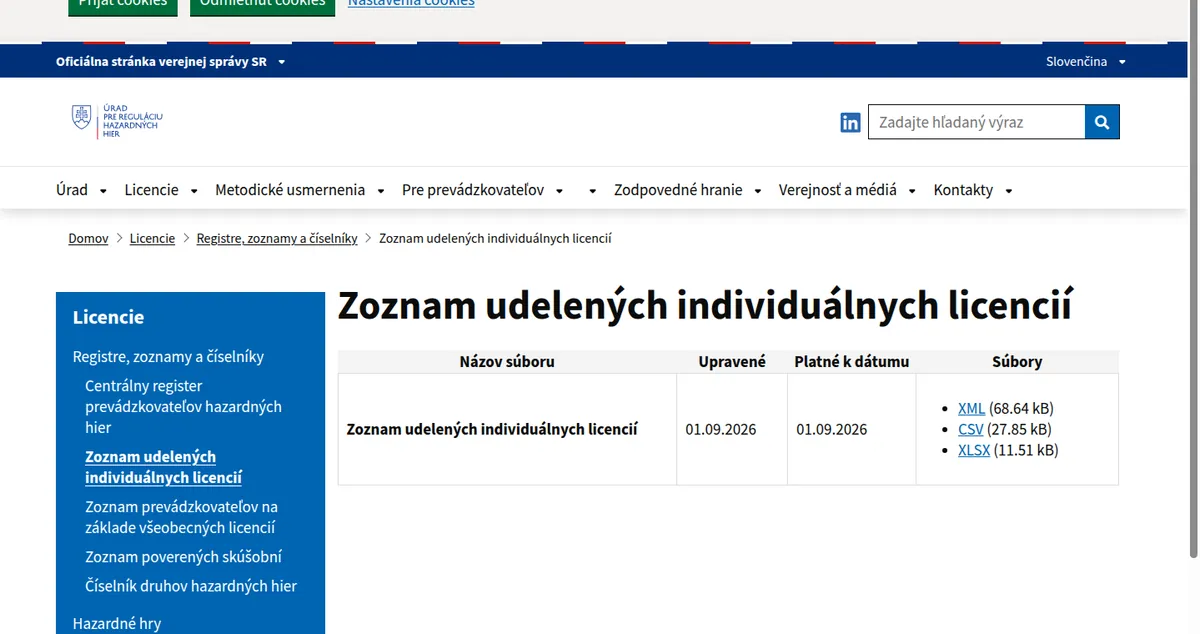
The file as at 1 September 2026 has 134 rows and 39 companies. Twenty-one of them hold a licence to run internet games in an internet casino. It is published in both CSV and XLSX.
Slovakia stands on no restricted-countries list
Every brand whose terms we read publishes a list of countries it refuses players from. Their lengths vary surprisingly: PlayAmo 217, Metaspins 58, Wolf.bet 48, Wild Fortune 47, Shuffle 15, Empire.io 12 and Rainbet 11. At Bitcasino only Japan is named, and at Bitsler the list broke off after the first item in the text we captured.
Slovakia is on none of them. That is why nine of those ten rows stand in our table; the tenth is our partner and we traced no such document there. PlayAmo is the interesting one: its list holds 217 countries including the Czech Republic, Poland and Hungary, but not Slovakia. The neighbours yes, us no. What sense such a line makes cannot be read from the document, and we do not invent it.
The restricted-countries list is the industry's most overlooked document. Not a recommendation and not marketing: a contractual term the operator invokes when money must leave. A country on that list means the account could open, play could run, and the payout may still not happen.
Behind nine brands stand nine different companies
A brand is not a contracting party. That is the company named in the terms, usually called something other than the site you play on. From the nine documents we read we took nine different names:
- Bitcasino.io: Moon Technologies B.V.
- Bitsler: Oyine N.V.
- Empire.io: Pixel Entertainment Limited
- Metaspins: 3-102-959384 SRL
- PlayAmo: Novatrix SRL
- Rainbet: RBGAMING N.V.
- Shuffle: Natural Nine B.V.
- Wild Fortune: Metlait SRL
- Wolf.bet: Cipher Games Ltd
Those are four different legal forms, and not one is a Slovak company or a company meeting the registered-office condition of § 36(1). Wild Fortune also gives a Costa Rican company registration number, different from its licence number; two separate items, easily confused.
The names above are copied from the terms, not from registers, and once the two sources diverge. The Curaçao certificate for the Metaspins domain names Metaspins N.V., no. 160102, while 3-102-959384 SRL holds its Anjouan licence. Which source says what is examined in foreign licences.
A company name is an item with a date, not a constant. The Slovak Zoznam zakázaných ponúk, the register of prohibited offers, gives for each address the provider found at entry, and at two of our three entered domains that name no longer matches today's terms. It is set out in the list of prohibited offers.
The country in a brand's name is not where you play from
In Slovak searches a foreign casino is regularly described by the country where it is licensed, most often Britain. Our figures say the reverse of what the phrase promises: seven of the ten in the table exclude the United Kingdom, not one excludes Slovakia. The breakdown, with the licence the ten actually give, is in English casino no-deposit bonus.
The practical consequence is simple. Find the country that concerns you in that list yourself, before registering. What a licence number proves and does not is examined in foreign licences.
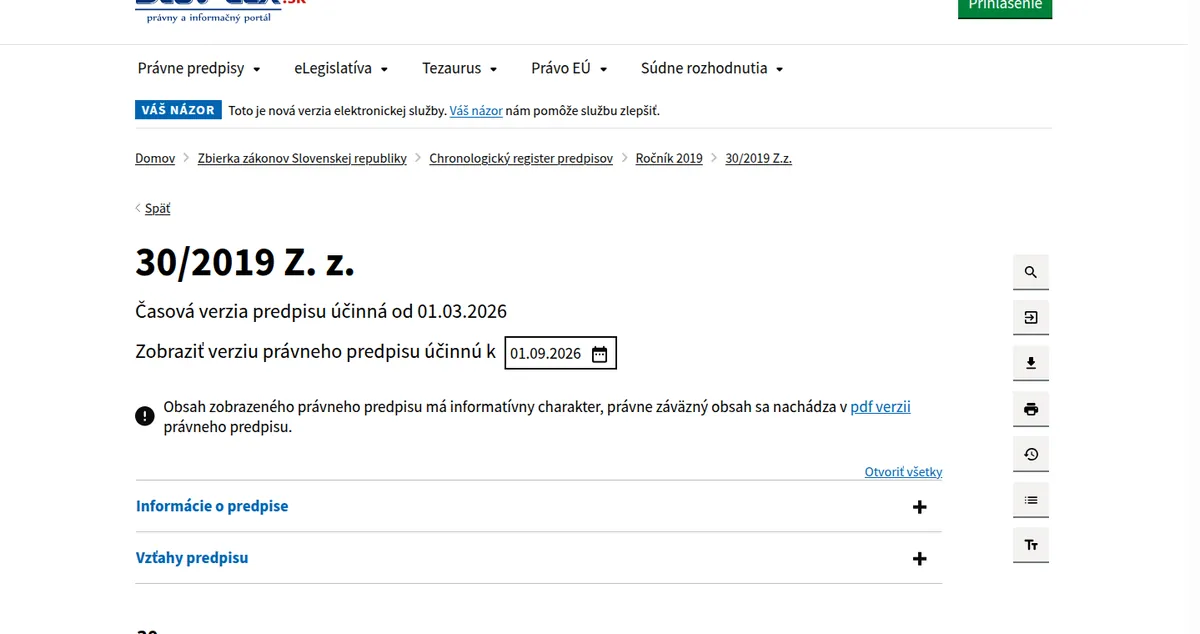
Every citation of § 31, § 33, § 36, § 80, § 85 and § 95 on this page comes from the version of the act in force from 1 January 2026. The English translation the authority itself offers is the version of 1 June 2019, and its numbering of the paragraphs of § 85 already differs.
It holds a licence, only from somebody else
Exclusion under § 36 does not mean the brand is licensed nowhere. It means another authority issued the licence, and nothing follows from it for a Slovak player.
Of the nine read, four give a number from Curaçao and five from Anjouan. Two details are worth attention. Rainbet gives no licence number in its terms, only a company registration number and a sentence that it is licensed in Anjouan; the number we have comes from the register, not its own text. And at Bitsler an application in the transitional regime stands behind the Curaçao number, not an issued licence.
The difference between “a licence is issued” and “an application is filed” matters more contractually than the jurisdiction. All nine numbers are set out in foreign licences.
What you can check about a foreign brand in ten minutes
Three documents, three answers, all public.
The licence issuer's register. The number a brand gives in its footer you trace with whoever issued it. It answers one question: whether such a certificate exists and in what status.
The ÚRHH Zoznam zakázaných ponúk. It answers whether the Slovak authority already entered that domain. Three of our ten are on it, and how a domain gets there is described in the list of prohibited offers.
The brand's own terms. They answer what will cost you money: when documents are asked for and how much may leave in a week or month. The breakdown is in identity verification and payout limits.
What a foreign brand does not have
It has no duties under Sections 31, 32 and 33: four identifying items at registration, seven pieces of information on screen at every login, and documents before the first bet. Those duties are set out in registration without documents.
Nor does it have the register of excluded persons. That is kept by Úrad pre reguláciu hazardných hier (the Slovak gambling regulator) under § 33, and an internet-game operator with a Slovak licence must check it at every player login. A self-exclusion set on the licensed side does not reach the other, a difference with nothing to do with bonuses or payout speed.
Nor is there supervision you could turn to from Bratislava. A dispute runs under that company's law and terms, and that is the only risk really awaiting a player from Slovakia; it is not an administrative offence, as what the law says shows.
Nor, finally, any duty to publish anything. Hence the blanks in our table, and hence we leave them blank.
What is prohibited is its offer, not the player's participation: § 95(1) falls on supervised entities under § 80(b) to (k). And the loudest part of that offer, the bonus, has its own branch here, starting with no-deposit bonus.